December 5, 2014

The Other Side of College Learning: A Well-Rounded Education Beyond the Textbook

No matter your major, there are plenty of facts to learn and memorize throughout college. Yet, there’s an unstated group of skills that college should also teach, skills that are often picked up if not studied directly, though you won’t find them on any syllabi. As you go through college, there are other skills worth making sure that you’ve learned, as, like it or not, you’ll be expected to have working knowledge, if not be a master, of the said skills.

Writing
You don’t need to be an English major to know how to write well, or at least how to write concisely, properly, and effectively. No matter your major, college life will require you to do plenty of writing. This is a huge annoyance to some students, but if that’s you, then you should actually be more  appreciative of the chance to practice. You probably won’t be writing many 10-page papers after graduation, but you will be writing emails, memos, and other messages that require the written word. It’s quite frustrating when, after writing something, it’s ambiguous and incomplete in its message. Also, there are a number of grammar and punctuation rules your expected to follow that college helps to entrench correctly—hopefully you caught that slip-up in the last sentence if you’re paying attention.

Speaking
Speaking in front of large groups isn’t a pleasant activity for most, neither is speaking about yourself during a job interview. Even so, college again is supposed to help foster such communicative skills. There are public speaking classes in most schools, yet even just communicating well on a personal level is a skill worth making sure you’re capable of. This one, at least, isn’t too hard to work on, as, if you talk to anyone, you’re practicing. And while most of us don’t go around starting conversations to boost communicative skills, at any workplace, it’ll be a skill that’s used daily.

Politics
OK, so maybe you didn’t vote in your last local election or maybe you still need to update your registered voting address. And maybe you’re not tuned in to CSPAN daily. Either way, it’s not a bad idea to have a basic knowledge of politics and to maintain it throughout college and afterwards. Knowing and caring about what’s happening in your community, and the whole world for that matter, will never be a bad thing. While so much discussion about politics is synonmous with frustration and anger, no one says you have to get feelings mixed up while trying to make yourself more aware!

Manners
You might learn to say please and thank you while you’re in kindergarten, but now’s the time to make sure you’re putting all of that learning into effect! No, once again you won’t find many classes in college out there on manners and etiquette, but by now, you probably know what’s right and expected. Your parents’ generation might appreciate such old-fashioned etiquette more, yet good manners are never a bad thing to posses, whether you’re grabbing lunch with a professor or on a first date. 

November 25, 2014

Is There Enough Fun To Be Had In College?

Pursuing new academic interests is one of the often mentioned goals of college. But what about finding new hobbies? That’s actually another benefit that comes from school. While college will always be about expanding your educational horizons, it’s also a great time to pick up a few new activities that you enjoy doing. 


Before going further, perhaps it seems college wouldn’t be such an ideal time to discover new hobbies or interests. After all, a significant part of college life involves schoolwork. That being said, though, you’ll still take time—and need time—to unwind. And for such reprieve, college offers the perfect environment. 

You know that, even if you go to a small school, there will be plenty of extracurricular events occurring at all times. Have you ever tried rock climbing? How about painting? You’ll be in an environment where there are always new things going on, and opportunities to try them all will be in abundance. Best of all, since it’ll be a school club, it’ll be free!

You might not think you need any help finding new forms of fun or new hobbies, but what if you discover something that you really like? This same concept is often applied to learning; you’ll frequently hear that college is a great time to explore academic interests, and it’s part of the reason why your school probably has diverse general education requirements. So take this same spirit and apply it to your hobbies, as you won’t know what’s out there until you try.

At the very least, you’ll certainly hear friends discussing TV shows and music that they like, and you’ll probably check out what they’re interested in, too. This will lead to further discovery of new interests, and while becoming a fan of a new favorite show isn’t exactly going to be life-changing or one of your best college memories, it’ll serve as a minor example of the sort of connections and new experiences that college life fosters.


And if you’re one for sports or other recreational physical activity, college again provides the best time to try something new. It might not be the easiest to get into, say, touch football a couple decades down the road. So don’t miss out on such activities while you can! 

November 14, 2014

Staying Green in College: Tips For Environmentally Friendly Dorm and College Life

It’s been trendy for years now to live as environmentally friendly as possible; there are even some rather extreme green methods of green living out there! Yet, assuming you’d like to do your part and help out the earth, you don’t need to live a plastic-free life just to have a more green lifestyle in college. There are a variety of simple, effective, and college-related means of staying green.

Unplug Your Dorm
No matter if you spend plenty of time in your dorm room or go there mainly just to sleep, many of your electronics, or devices related to your electronics, will always remain in your dorm room. Your charger for your cellphone and for your laptop, for example, are probably lying in some tangle on your floor. Aside from being a tripping hazard (which is a topic for
another day), those chargers can be doing damage if unchecked. OK, they’re not really a safety threat, but they’re an earth-health threat. Don’t leave them plugged in when not in use, as you’ll drain unneeded electricity. No, you don’t pay an electrical bill for your dorm room, but since it’s so easy to just unplug those chargers, don’t leave them needlessly plugged in. The same goes for your electric pencil sharpener, printer, and other electronics that you might not use often. Sucking up unneeded electricity is like pouring water down the drain. Why waste?

Keep it in Park
While you’re on campus, you might have brought a car to school, even if it’s your first year. Maybe you need to drive to sports practice or to club meetings off-campus. Either way, don’t use your car when it’s not needed. In fact, you’re likely not even adding to the convenience factor when driving when you consider parking, gas, traffic jams, and possibly a fender bender. Even if your campus is spread out, it’ll never be out of the question to walk, ride a bike, or take a campus shuttle if available. You know that walking and biking will also combat freshman-year weight gain, so it’s a win-win.

Finish Your Food
Speaking of weight gain, that all-you-can-eat school cafeteria will be beckoning at all hours of the day and night. Usually it’s a quick swipe of your student ID, and plates of plates of food are yours for the taking. Hopefully it tastes good, and if it does, that smorgasbord of plates can pile up quick on your cafeteria tray. There’s plenty to be said about healthy eating in college, yet also consider reducing wasting food. A few bites of a sandwich here, half a cookie there, and some spoonfuls of soup might comprise a meal, but consider how much you just threw out. You might think uneaten food is helping your figure, but you’re also wasting and hurting the environment with every tossed bite. Instead, take only what you plan to consume and avoid sending half your meal to some landfill. Some green-innovative schools collect food scraps for compost. How about getting that started in your school?

Plenty of Paper
Along those lines, avoid tearing out 15 napkins, using two, and then tossing the rest. To save paper further, you can look toward the classroom. You’ll receive plenty of syllabi and paper handouts throughout your college career, which means lots of felled trees. You probably won’t be rushing out to plant more trees, but you can certainly recycle all those papers. (OK, you might have to resist the urge to burn a folder from a particularly loathsome class.) Recycling a whole course-load of papers can really add up. And it’s not like any extra work is required—just drop it in the recycling bin instead of the trash!


October 10, 2014

If At First You Don't Succeed, Get Organized!


It was freshman year of college, my very first semester. Although I was nervous at first, everything began to run smoothly and I thought I was poised for success. I say “thought” as my confidence came crashing down at the semester’s end. It was a Tuesday.

That morning at 9 AM I got a text from a friend asking why I was not in class to give my final presentation. My final presentation. I was supposed to present at 8 AM and had essentially missed my final exam. It was all I could think about as I trekked up the three floors to my professor’s office, trying to think of a way to explain that I had mixed up my schedule. It was a Tuesday/Thursday class, and I thought the exam was on Thursday. After a tearful apology, my professor informed me that he would give me an F instead of a zero, it was all he could do. I understood, it was a presentation, how could I make it up, but I was devastated nonetheless. After a reasonable amount of crying and sulking I chalked it up to a learning experience and told myself it would never happen again. That is until it did happen again on Thursday of that week. I got to my class, ready to ace the final, but was the only one there. Apparently, all Thursday classes had their exams on Tuesday. Two Finals missed in my first semester at college.

To make an even longer story short, I felt the repercussions of my disorganization when my grades in those two classes fell and I was kicked out of Honor Society. While this was devastating to me at the time, I did learn an important lesson: To succeed one must get organized. It doesn't matter how smart you are or how much you have studied,  if you don’t know when and where things are, you will get yourself into some sticky situations. After resolving to never EVER let something like that happen again, I made some changes. I got organized. Here’s how:


Buy an Agenda
In middle school teachers are always harping on their students to carry and use an agenda. They try to get students into the habit so that they will be organized for high school and beyond. Some students take this advice and others don’t. If you haven’t yet made your peace with the agenda, it’s time to do so now. The agenda/calendar will be your most important tool in college and beyond. Don’t believe me? Think about it. You have at minimum 5 classes, all with different assignments and different due dates. That’s a lot to remember for anyone, and even harder for a college student who has to juggle work, practice, and other important social engagements.


Color Code

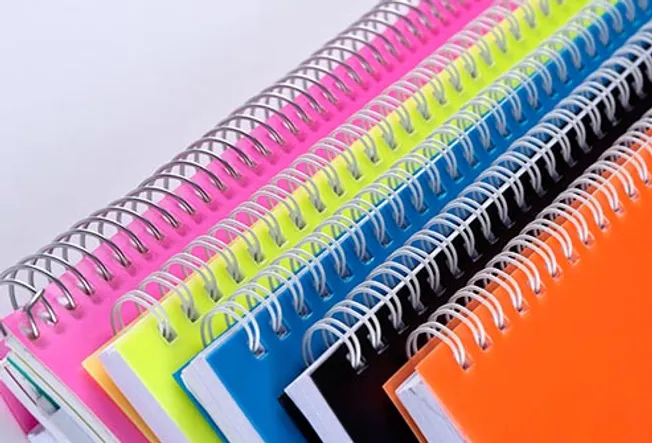
If you’re running out of your dorm room or racing to school from work, you are bound to grab the wrong black notebook. What you thought was History 101 will actually turn out to be Intro to Writing. Color coding your notebooks and other college essentials will make your life easier. Guaranteed. You won’t have to spend your precious time looking for things as you will have a visual and won’t be reading through names until you find the right one.


Make a Physical List
Sure, you mentally catalog everything you need to accomplish in a day, but you are bound to forget at least one of those things, and it could be the most important to-do on your list. If you are writing down what needs to be done, you won’t forget, and will even come up with a plan to get everything done in time. This not only helps with your organization, but your time management. Get a dry erase board and put it next to your bed or desk, that way you can add to it when you think of things.


Organize Your Work Space
There are tons of supplies for college that will allow you to get organized. Some essentials are even color coded - bonus! Whether you’re at your dorm room desk or the one in the spare room of your house, organize your work space. This will allow you to concentrate when you are working and focus on the task at hand, without being surrounded by clutter. Buy cheap bookshelves to store your books and notebooks or get individual shelves on which to store all of the supplies for each class. Find color-coded bins that will collect the work you haven't finished for your classes, so that whatever you do, you’re not folding up your work and putting it in your textbook.

Organization for college may seem like the most basic of things, but it is the most important thing you can do to ensure that you are successful. Take it from someone who had to learn the hard way. After I saw the error of my ways I made the dean’s list every semester, but I first had to learn the importance of staying organized.